> For the complete documentation index, see [llms.txt](https://docs-v3.toucantoco.com/llms.txt). Markdown versions of documentation pages are available by appending `.md` to page URLs; this page is available as [Markdown](https://docs-v3.toucantoco.com/visualizations-and-layouts/apps/customizing-apps/adding-assets.md).
# Adding Assets
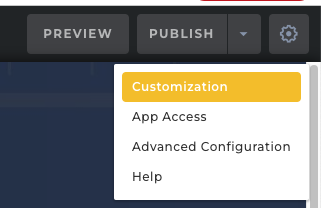
Access the asset interface through the settings icon on the top right of your app and then click on `Customization`.
## Identity Assets
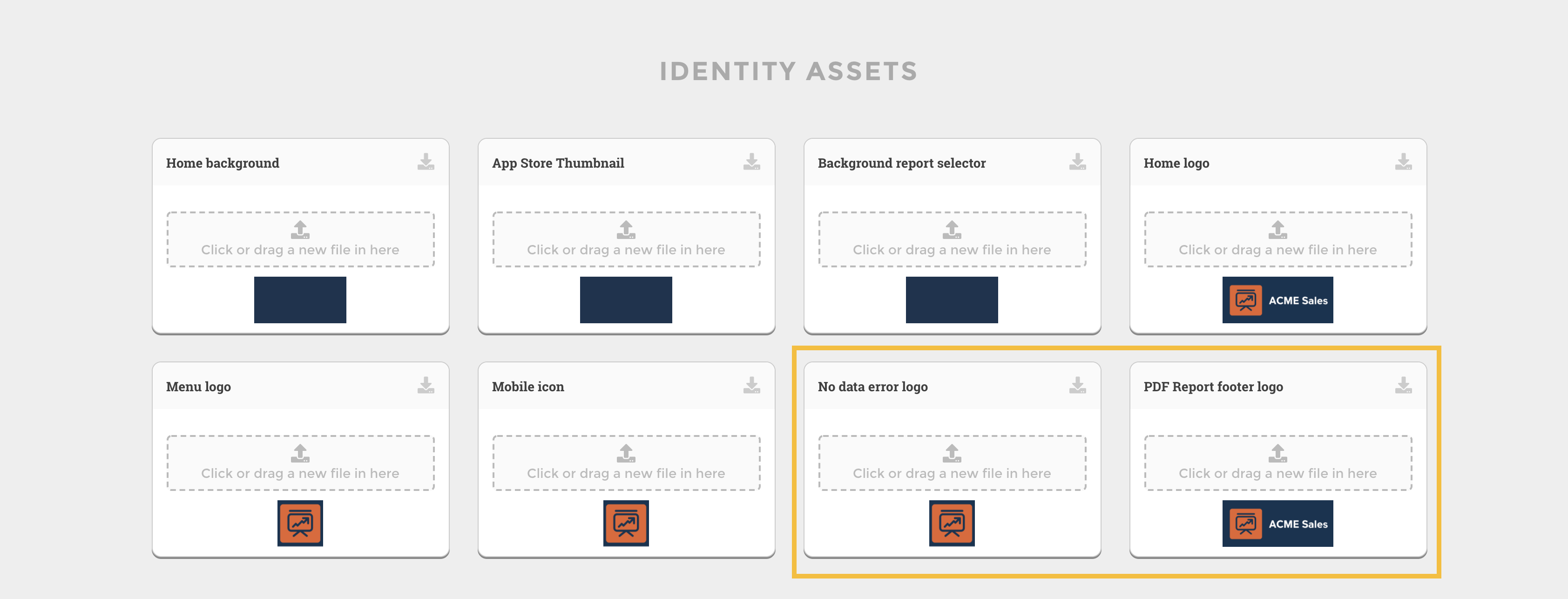
Some assets names are dedicated to a specific use and have a default value; they are the identity assets:
* **Home background**: Home background image
* **App Store Thumbnail**: Thumbnail image used in the app store. By default, it's the same as the home background (300x170px)
* **Home Logo**: Main brand icon used in the header (270x67px)
* **Menu Logo**: Secondary brand icon used in the sidebar (152x152px)
* **Mobile Icon**: iOS and Android icon (152x152px)
{% hint style="warning" %}
Following assets can be modified only if "white label" option is enabled on your platform
{% endhint %}
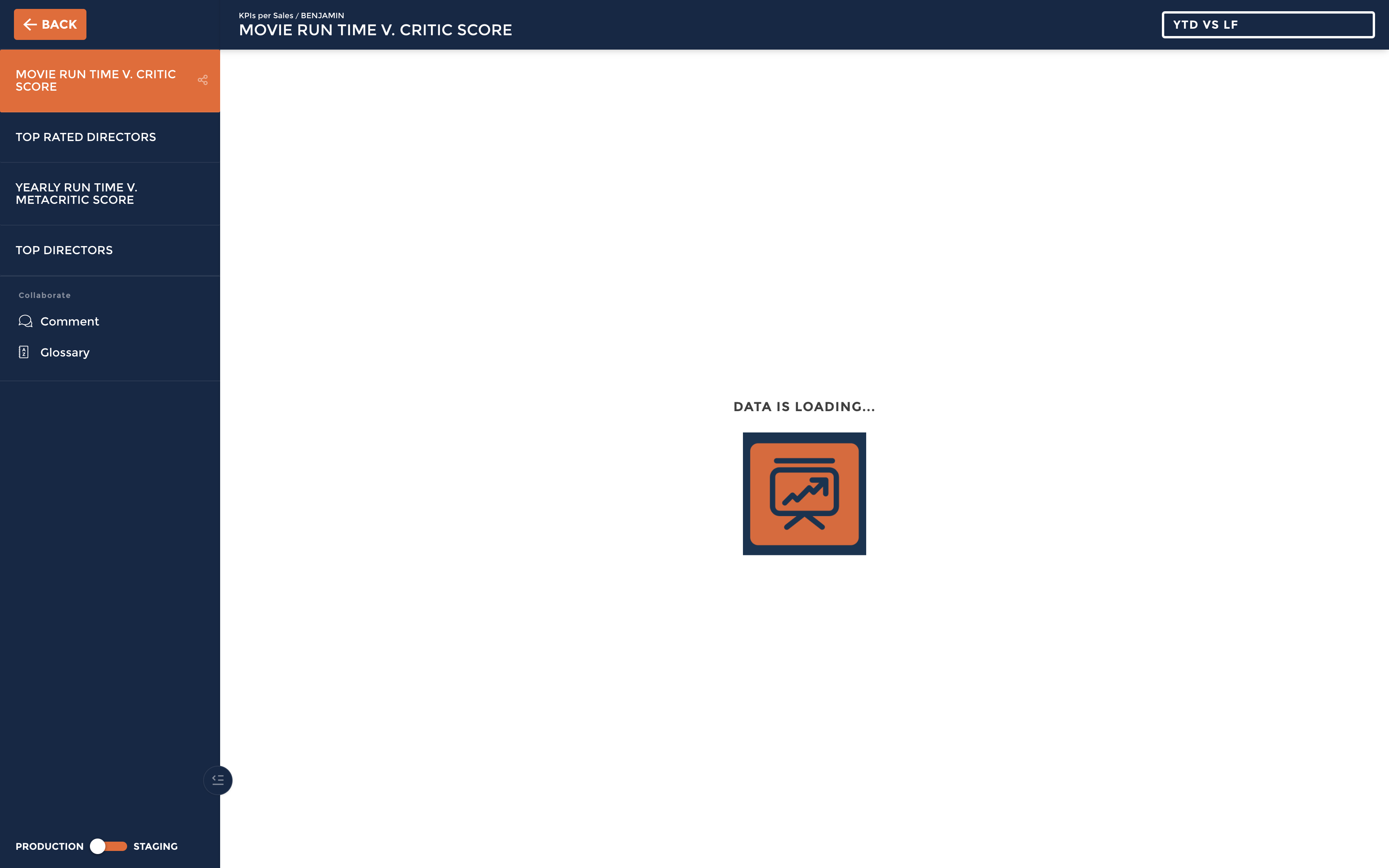
* **No Data Error**: Used when a visualization failed to fetch data (270x67px)
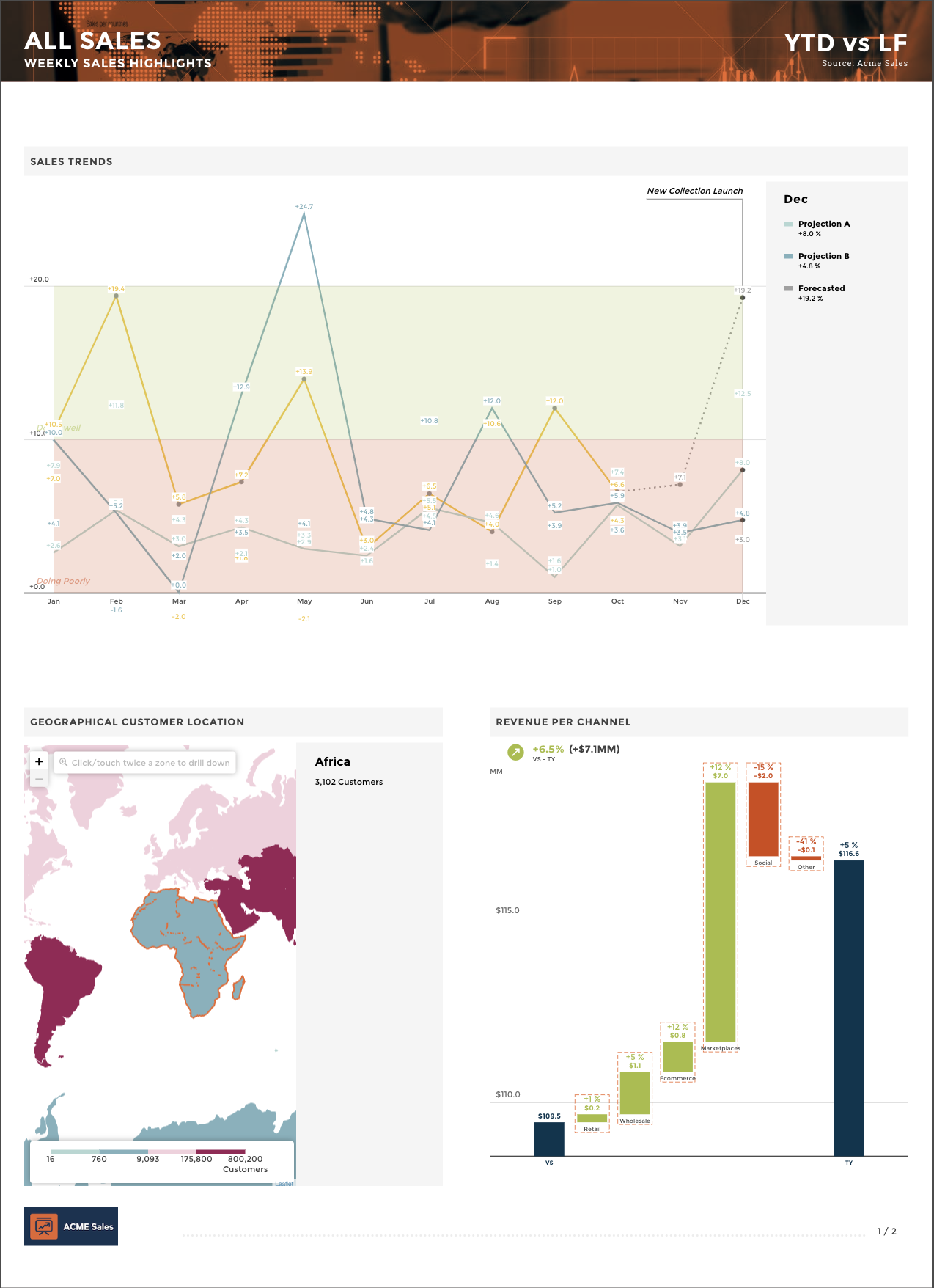
* **PDF Report footer**: Use in PDF Report's footer (270x67px)
identity-assets
* **Example: No Data**
* **Example: PDF Report - Footer logo**
## Uploading your own assets
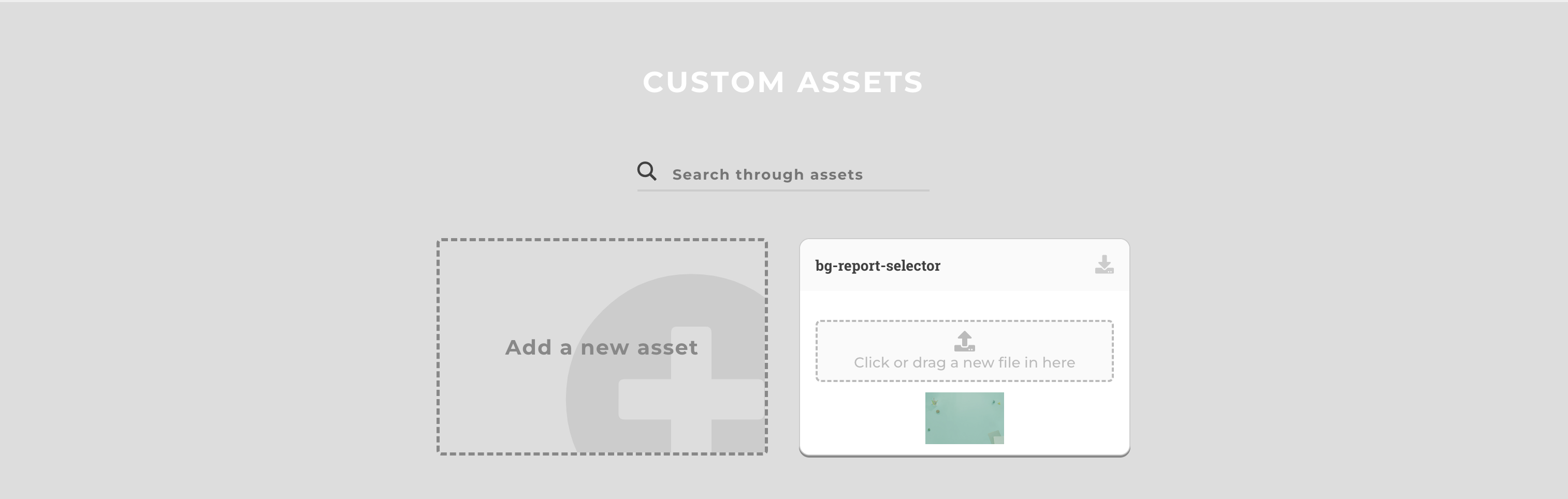
Simply drop the assets you want to use in the upload assets interface.
The name given to the asset corresponds to the filename without the extension.
You can update an asset by dropping a new file on an existing asset. The asset name will not change. If you want to change the asset name, you need to create a new one.
Only the following file formats are allowed:
* `.jpeg`
* `.png`
* `.gif`
* `.pdf`
Custom assets
---
# Agent Instructions
This documentation is published with GitBook. GitBook is the documentation platform designed so that both humans and AI agents can read, navigate, and reason over technical content effectively. Learn more at gitbook.com.
## Querying This Documentation
If you need additional information that is not directly available in this page, you can query the documentation dynamically by asking a question.
Perform an HTTP GET request on the current page URL with the `ask` query parameter, and the optional `goal` query parameter:
```
GET https://docs-v3.toucantoco.com/visualizations-and-layouts/apps/customizing-apps/adding-assets.md?ask=&goal=
```
`ask` is the immediate question: it should be specific, self-contained, and written in natural language.
`goal` is optional and describes the broader end goal you are ultimately trying to accomplish on behalf of the user. GitBook uses it to tailor the answer towards what is most useful for that goal.
The response will contain a direct answer to the question and relevant excerpts and sources from the documentation.
Use this mechanism when the answer is not explicitly present in the current page, you need clarification or additional context, or you want to retrieve related documentation sections.
 ## Identity Assets
Some assets names are dedicated to a specific use and have a default value; they are the identity assets:
* **Home background**: Home background image
* **App Store Thumbnail**: Thumbnail image used in the app store. By default, it's the same as the home background (300x170px)
* **Home Logo**: Main brand icon used in the header (270x67px)
* **Menu Logo**: Secondary brand icon used in the sidebar (152x152px)
* **Mobile Icon**: iOS and Android icon (152x152px)
{% hint style="warning" %}
Following assets can be modified only if "white label" option is enabled on your platform
{% endhint %}
* **No Data Error**: Used when a visualization failed to fetch data (270x67px)
* **PDF Report footer**: Use in PDF Report's footer (270x67px)
## Identity Assets
Some assets names are dedicated to a specific use and have a default value; they are the identity assets:
* **Home background**: Home background image
* **App Store Thumbnail**: Thumbnail image used in the app store. By default, it's the same as the home background (300x170px)
* **Home Logo**: Main brand icon used in the header (270x67px)
* **Menu Logo**: Secondary brand icon used in the sidebar (152x152px)
* **Mobile Icon**: iOS and Android icon (152x152px)
{% hint style="warning" %}
Following assets can be modified only if "white label" option is enabled on your platform
{% endhint %}
* **No Data Error**: Used when a visualization failed to fetch data (270x67px)
* **PDF Report footer**: Use in PDF Report's footer (270x67px)