> For the complete documentation index, see [llms.txt](https://docs-v3.toucantoco.com/llms.txt). Markdown versions of documentation pages are available by appending `.md` to page URLs; this page is available as [Markdown](https://docs-v3.toucantoco.com/data-management-in-datahub/managing-variables-in-toucan/easy-reference-to-variables.md).
# Easy reference to variables
The Easy reference to variables is a powerful feature in your app that allows to quickly access and insert available variables. This documentation explains how to use the Easy reference to variables and its current limitations.
### Accessing the Easy reference to variables
To access it:
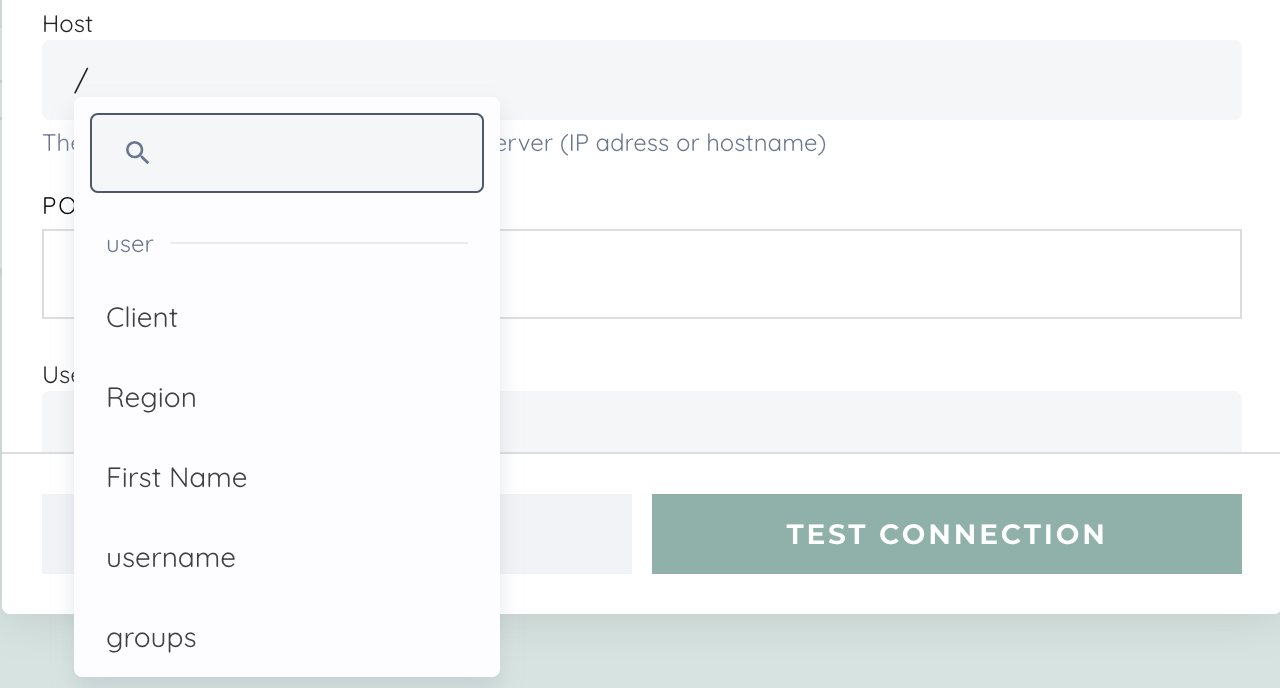
1. Place your cursor in a supported field (supported field have a grey hover).
2. Press the "`/`" (forward slash) key on your keyboard.
3. A menu will appear, displaying a list of available variables in your app.
{% hint style="info" %}
In YouPrep, the menu is accessible through the blue button at the right of each input field.
{% endhint %}
Easy reference to variables - variables menu
### Current Functionality
### Supported Fields
Easy Reference to variables is currently available in the dataHub following contexts:
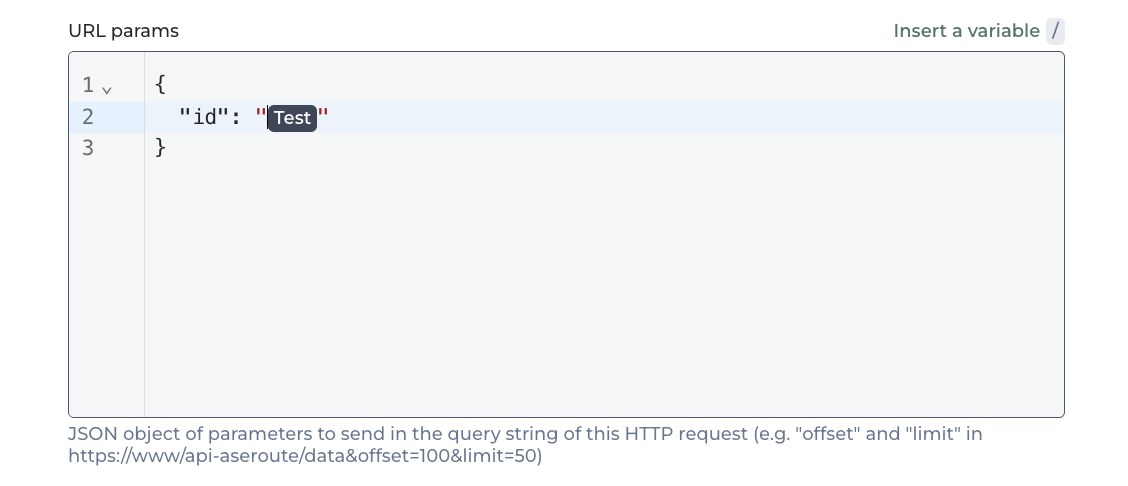
* Datasource configuration fields of type (`string`, `json code editor)`
* Dataset configuration fields (`string`, `json code editor`, `code editor)`
### Unsupported Fields
At present, the Slash`/` Menu is not available for:
* `Integer` fields
* `Secret-type` fields
and not supported in the dataset configuration part.
{% hint style="info" %}
For secret-type, you can still use variables in them by entering the full variables syntax:\
\
example: `{{user.secrets.my_pwd}}`in the password field if you want to use a variable in this field
{% endhint %}
Easy reference to variable - json code editor
Easy reference to variable - input string
Easy reference to variable - YouPrep blue button
### Benefits
* Quick access to available variables
* Reduces errors in manual entry
* Improves efficiency in configuration processes
---
# Agent Instructions
This documentation is published with GitBook. GitBook is the documentation platform designed so that both humans and AI agents can read, navigate, and reason over technical content effectively. Learn more at gitbook.com.
## Querying This Documentation
If you need additional information that is not directly available in this page, you can query the documentation dynamically by asking a question.
Perform an HTTP GET request on the current page URL with the `ask` query parameter, and the optional `goal` query parameter:
```
GET https://docs-v3.toucantoco.com/data-management-in-datahub/managing-variables-in-toucan/easy-reference-to-variables.md?ask=&goal=
```
`ask` is the immediate question: it should be specific, self-contained, and written in natural language.
`goal` is optional and describes the broader end goal you are ultimately trying to accomplish on behalf of the user. GitBook uses it to tailor the answer towards what is most useful for that goal.
The response will contain a direct answer to the question and relevant excerpts and sources from the documentation.
Use this mechanism when the answer is not explicitly present in the current page, you need clarification or additional context, or you want to retrieve related documentation sections.